
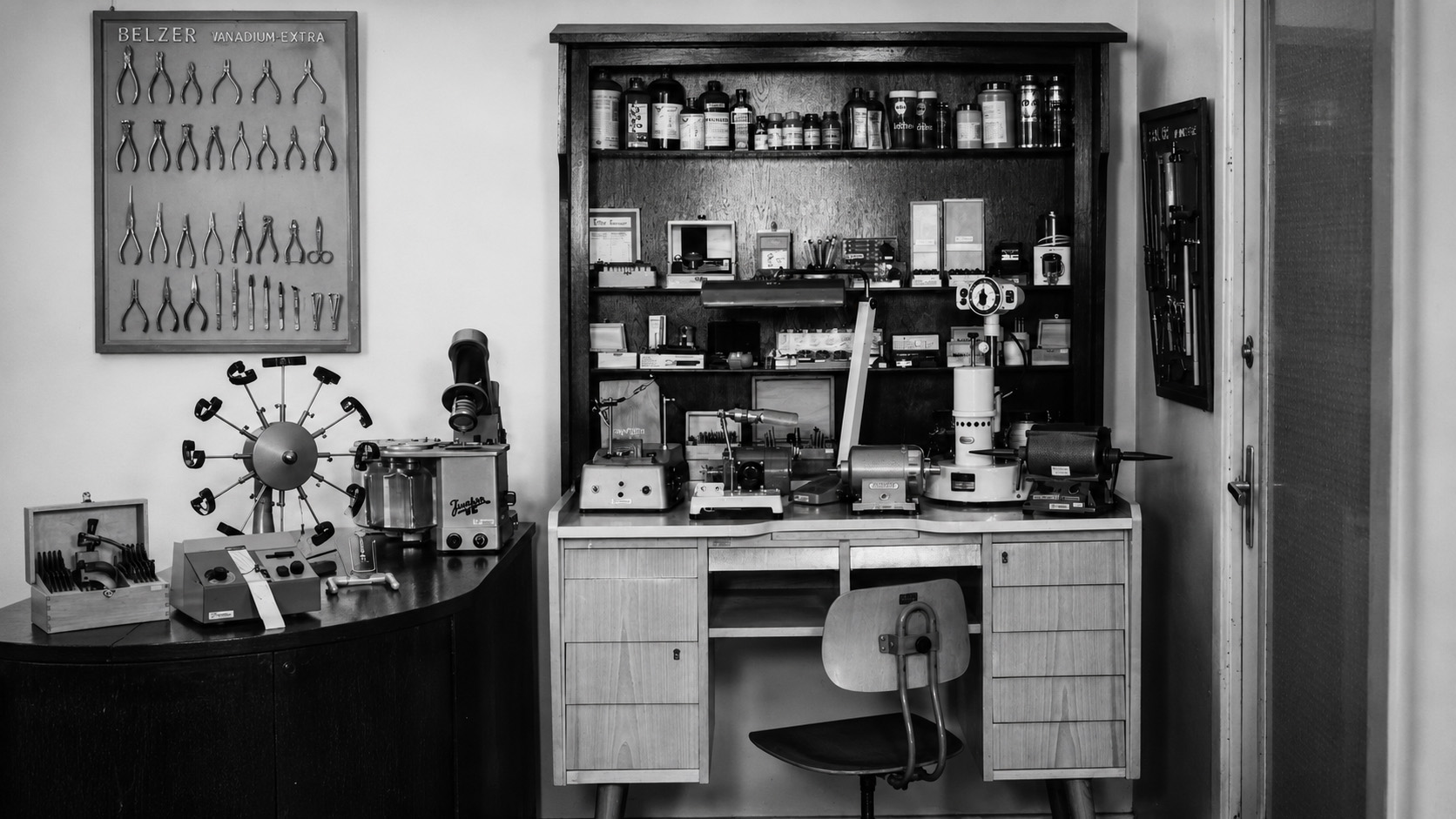
Repair & Restoration
-

Special files for restoration and reworking
—
von
by
par
por
di
Special files are used wherever hard materials, damaged threads or fine toothing can no longer be worked cleanly with classic files. This group of tools is not designed for removing bulk material, but for targeted reworking and precise correction of shape.
-

Material, measurement and hardness – the foundation of every restoration
—
von
by
par
por
di
Anyone who thinks the real challenge in watchmaking lies in patiently dismantling and reassembling small parts fundamentally underestimates the craft. The true complexity begins where raw material becomes working components: in knowing materials, in measuring to hundredths of a millimetre and in changing the hardness of steel under control. These three disciplines form the indispensable…
-
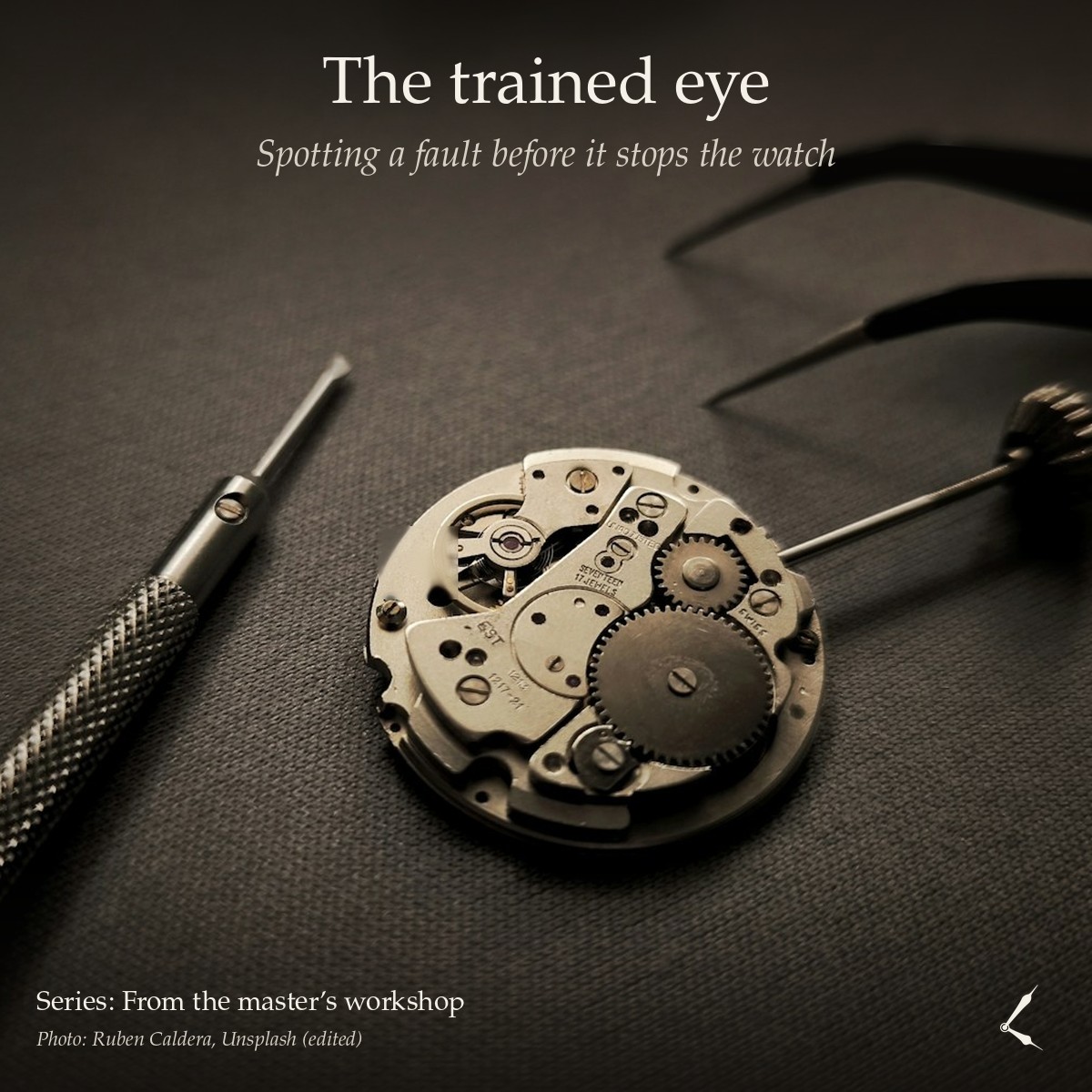
The trained eye: the art of spotting a fault before it stops the watch
—
von
by
par
por
di
A watch stops. The layman says: “It must be overwound.” The parts swapper says: “The movement is old, we need a new one.” The true watchmaker, however, says nothing. He listens. He looks. He examines.
-
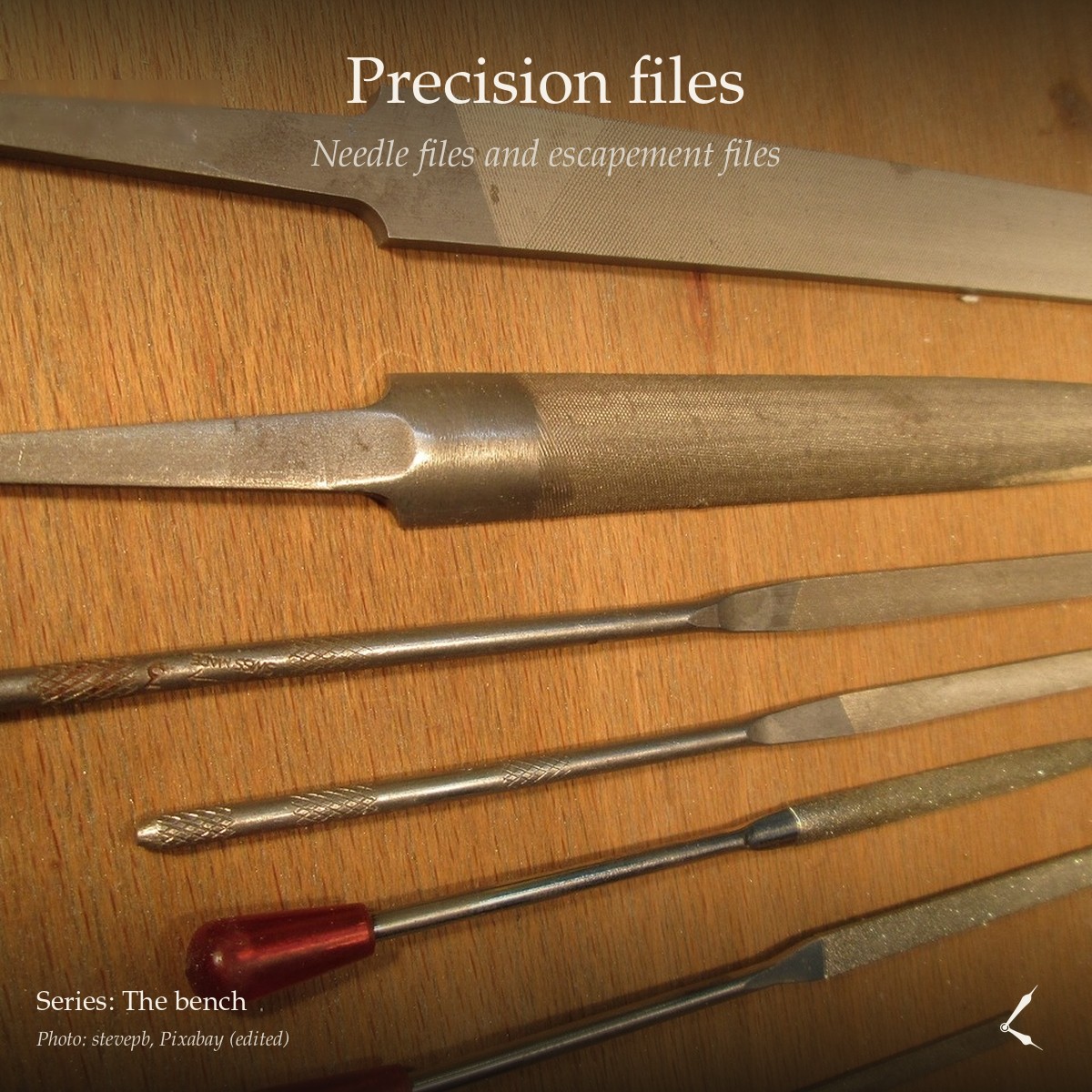
Precision files: needle files and escapement files in watchmaking
—
von
by
par
por
di
Precision files are essential tools in watchmaking for reworking delicate components with the greatest accuracy. Unlike coarse workshop files, they allow fine nuances and special applications. The choice depends on the material and the specific job. Safety and care are decisive for the long life of these tools.
-
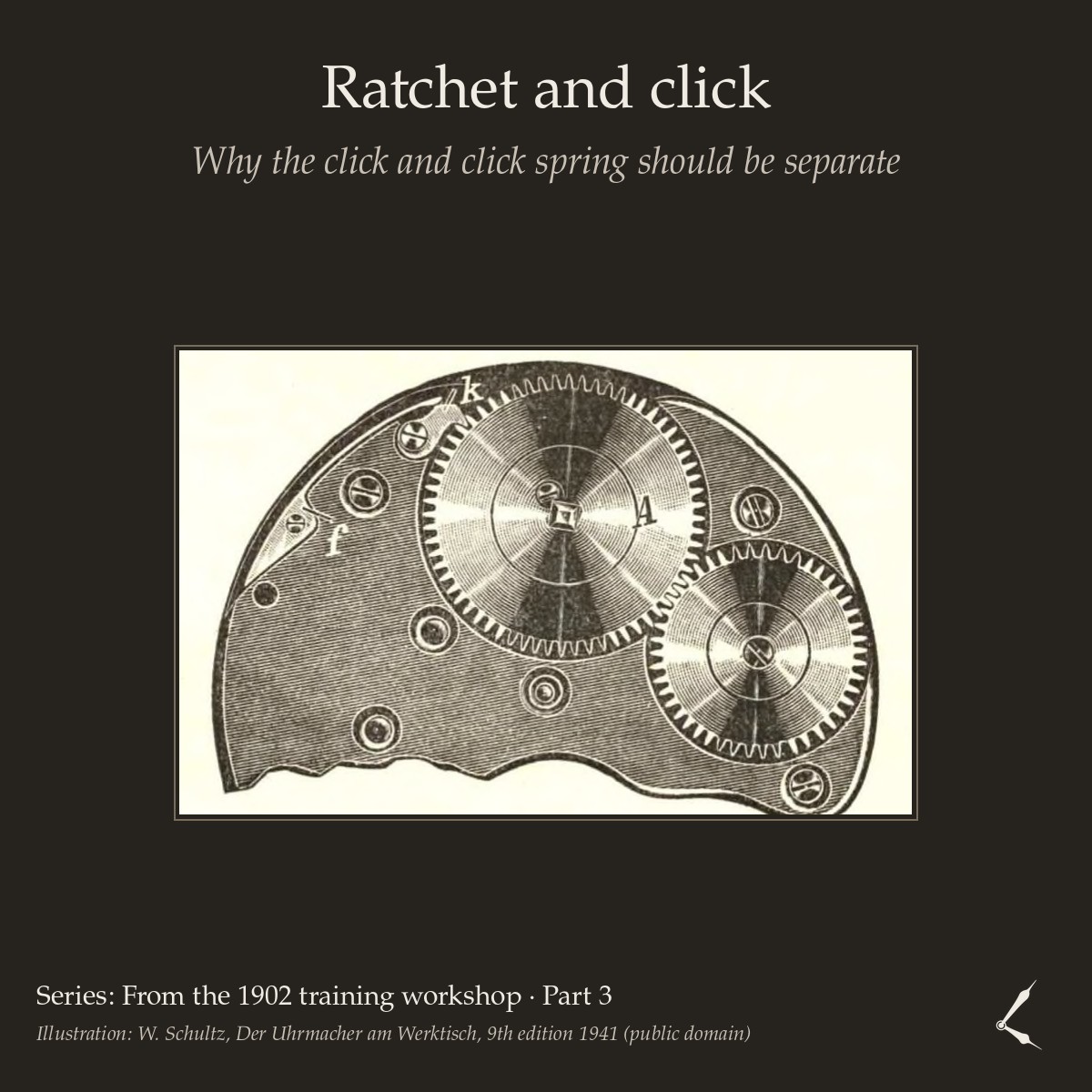
Ratchet and click: why the click and click spring should be separate
—
von
by
par
por
di
The ratchet and click is one of the simplest parts of a pocket watch, and for that very reason it is often neglected. Wilhelm Schultz used a case from the 1880s to show the damage a badly designed click can do.
-
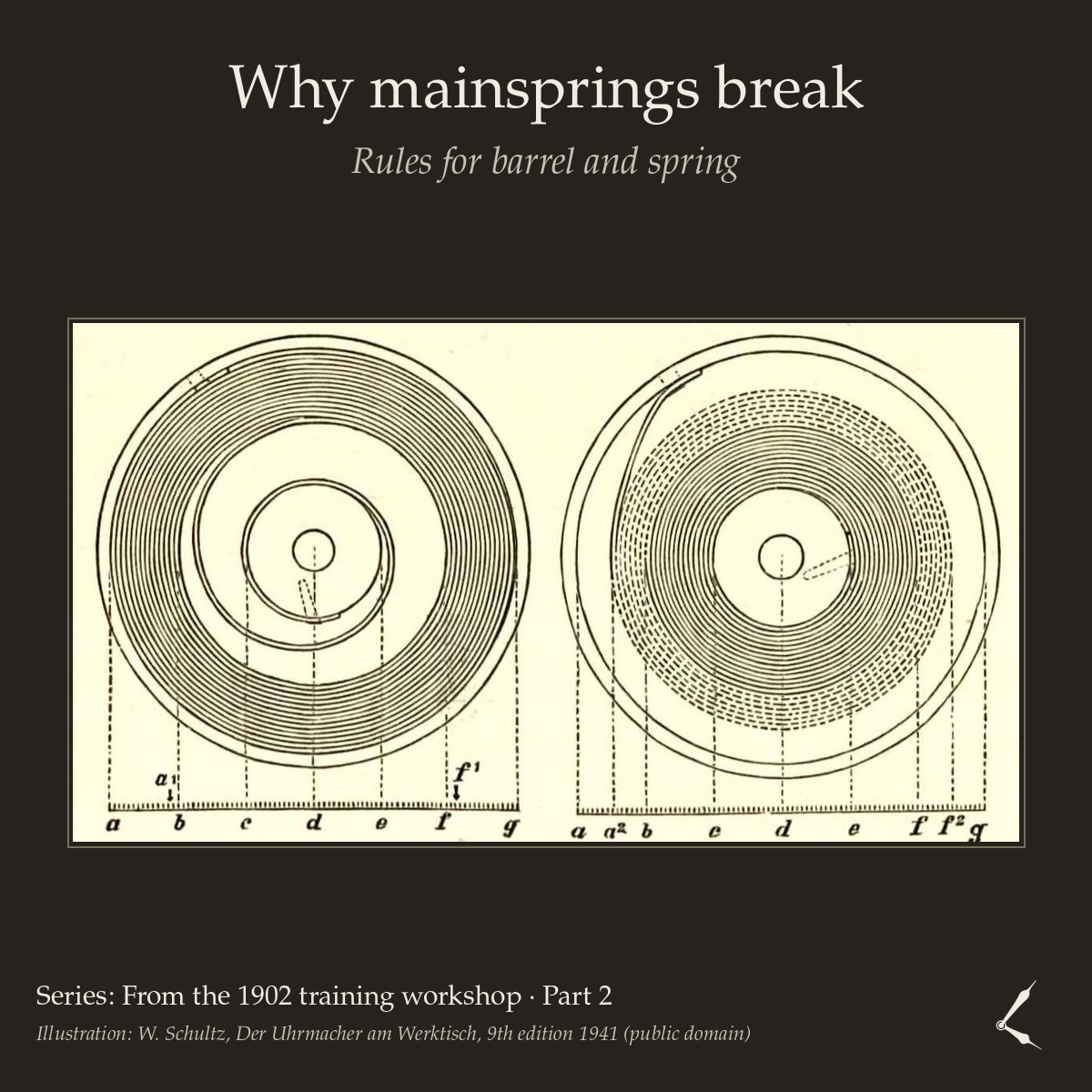
Why mainsprings break: Schultz’s rules for barrel and spring
—
von
by
par
por
di
A mainspring rarely breaks without a reason. Wilhelm Schultz named the most common faults in fitting and calculated how much spring belongs in a barrel – with a rule of thumb you can still check today.
