
Blog
Workshop knowledge about mechanical watches
-

Weight vs. spring: the heart of the movement and the eternal struggle for even force
—
von
by
par
por
di
Every mechanical timepiece begins with its motive power. Weight drive delivers constant force but ties the clock to one place; the mainspring made timepieces portable but delivers uneven force. This article shows how the stop work, ratchet and click and above all the fusee tackle the problem.
-
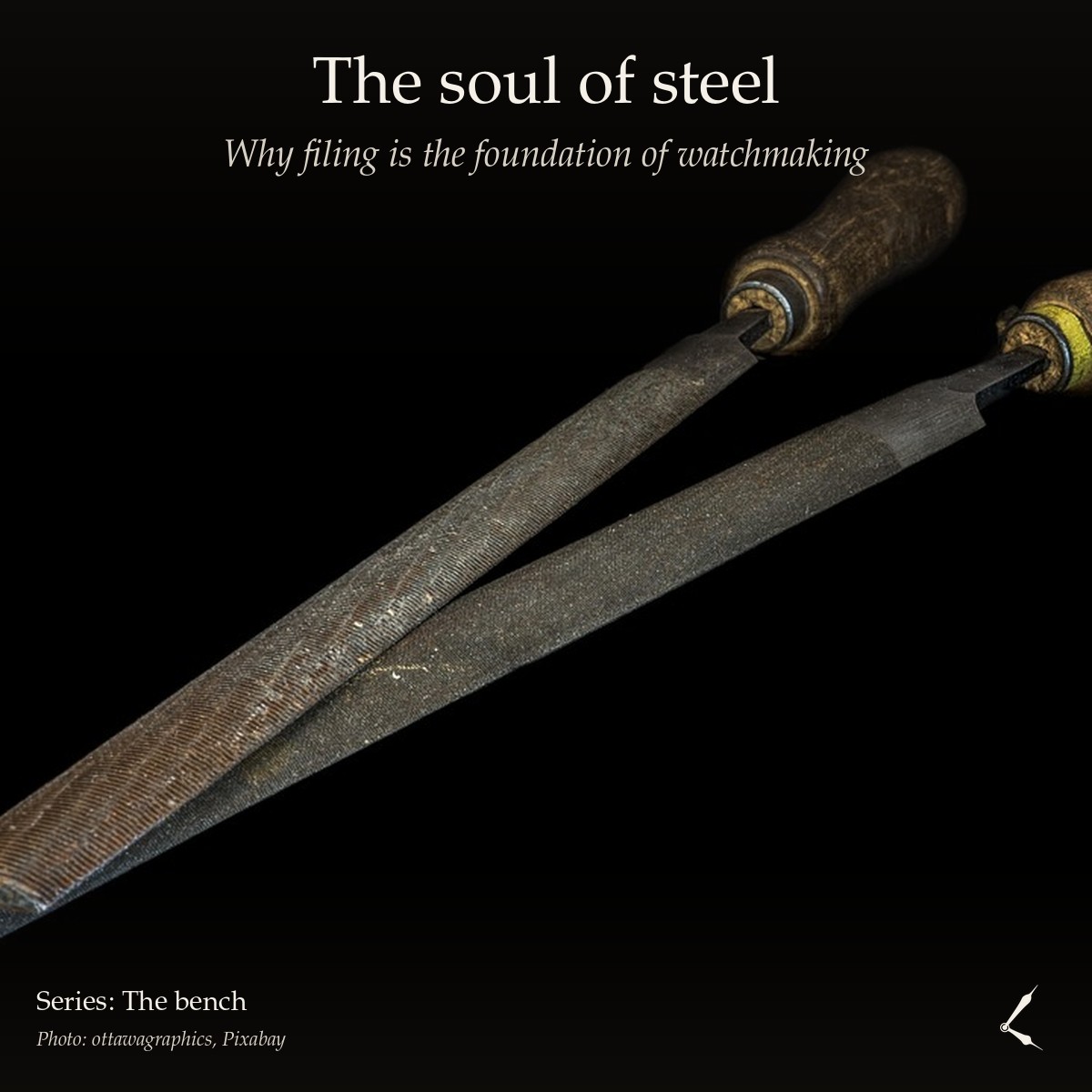
The soul of steel: why filing is the fundamental art of the watchmaker
—
von
by
par
por
di
Before we talk about tourbillons, escapements or minute repeaters, we have to talk about the foundation. About a skill that is often smiled at, misunderstood in watchmaking schools as a mindless exercise, and yet perhaps the most important basic skill of all: filing.
-
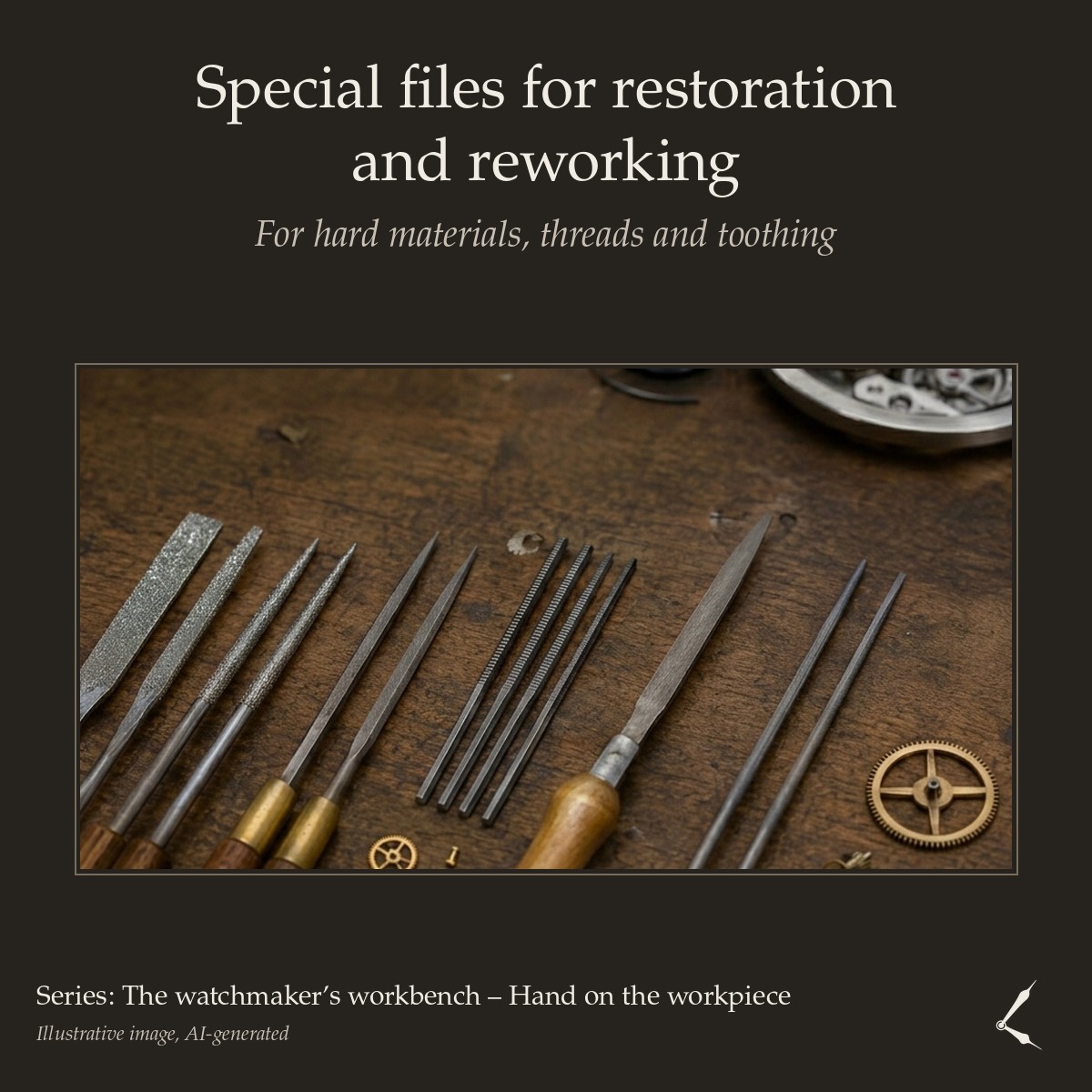
Special files for restoration and reworking
—
von
by
par
por
di
Special files are used wherever hard materials, damaged threads or fine toothing can no longer be worked cleanly with classic files. This group of tools is not designed for removing bulk material, but for targeted reworking and precise correction of shape.
-
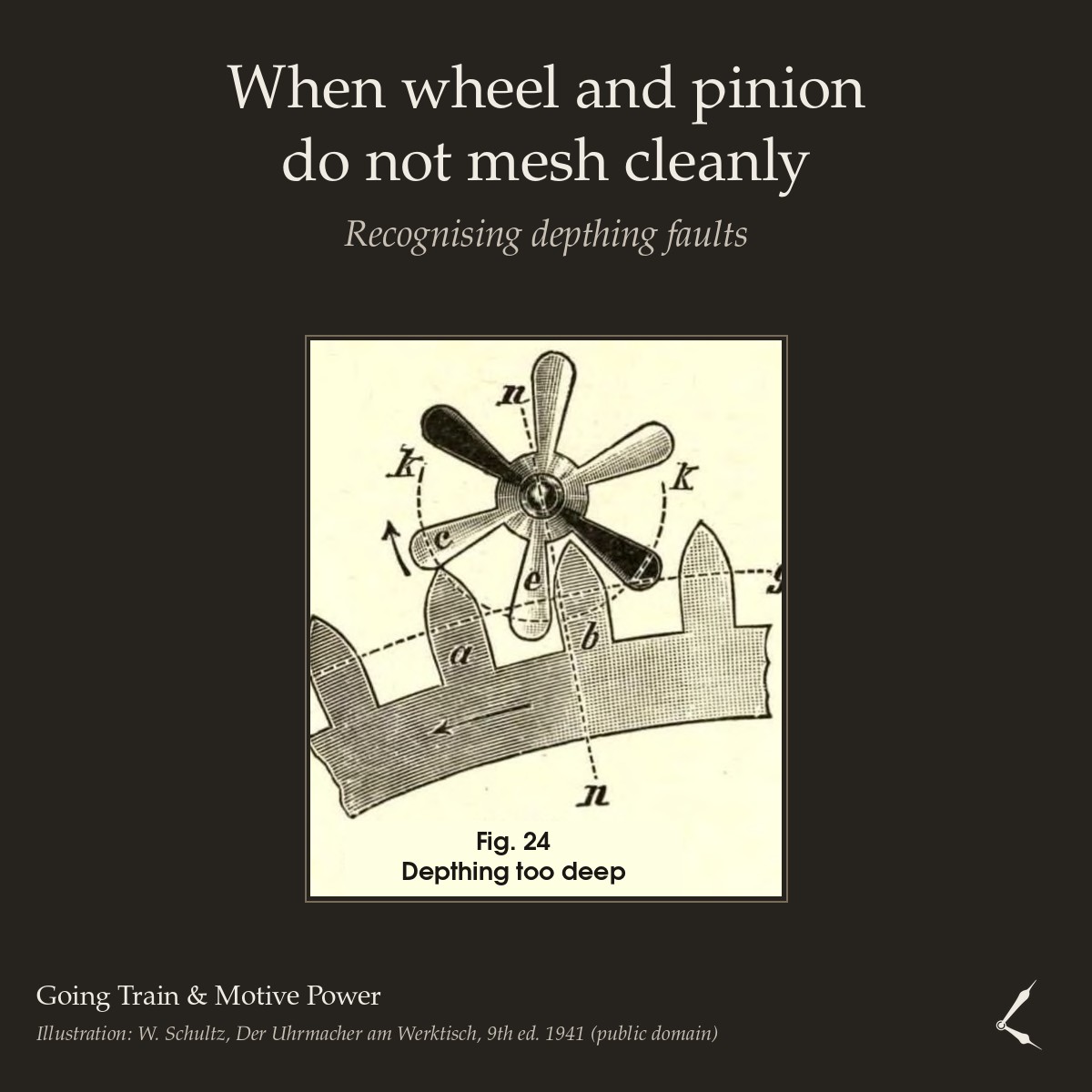
When wheel and pinion do not mesh cleanly: recognising depthing faults
—
von
by
par
por
di
Before the function of the escapement is checked, it is worth taking a close look at the going train. If even one depthing between wheel and pinion is faulty, a loss of power in the going train can wrongly be attributed to the escapement.
-
Material, measurement and hardness – the foundation of every restoration
—
von
by
par
por
di
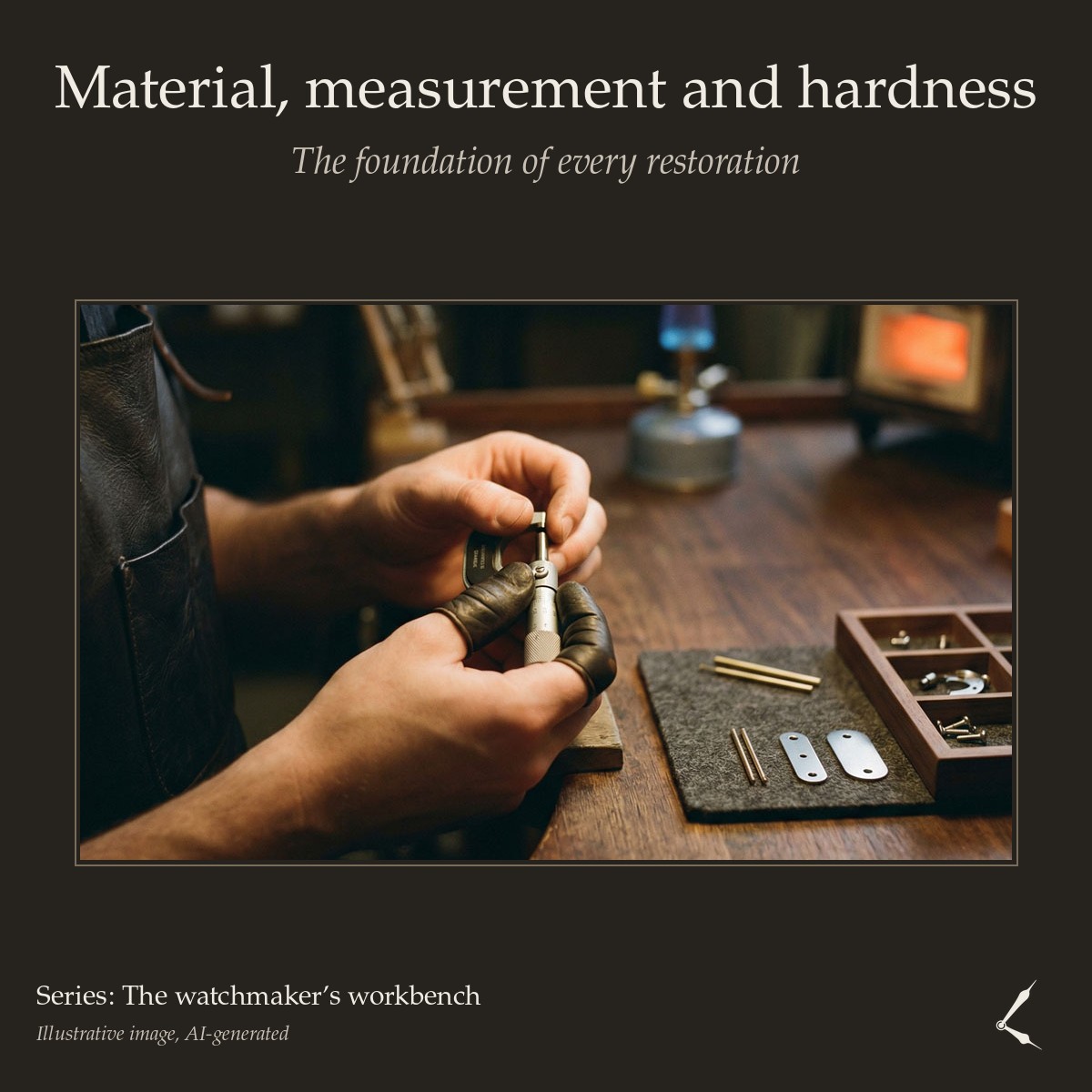
Anyone who thinks the real challenge in watchmaking lies in patiently dismantling and reassembling small parts fundamentally underestimates the craft. The true complexity begins where raw material becomes working components: in knowing materials, in measuring to hundredths of a millimetre and in changing the hardness of steel under control. These three disciplines form the indispensable…
-
The trained eye: the art of spotting a fault before it stops the watch
—
von
by
par
por
di
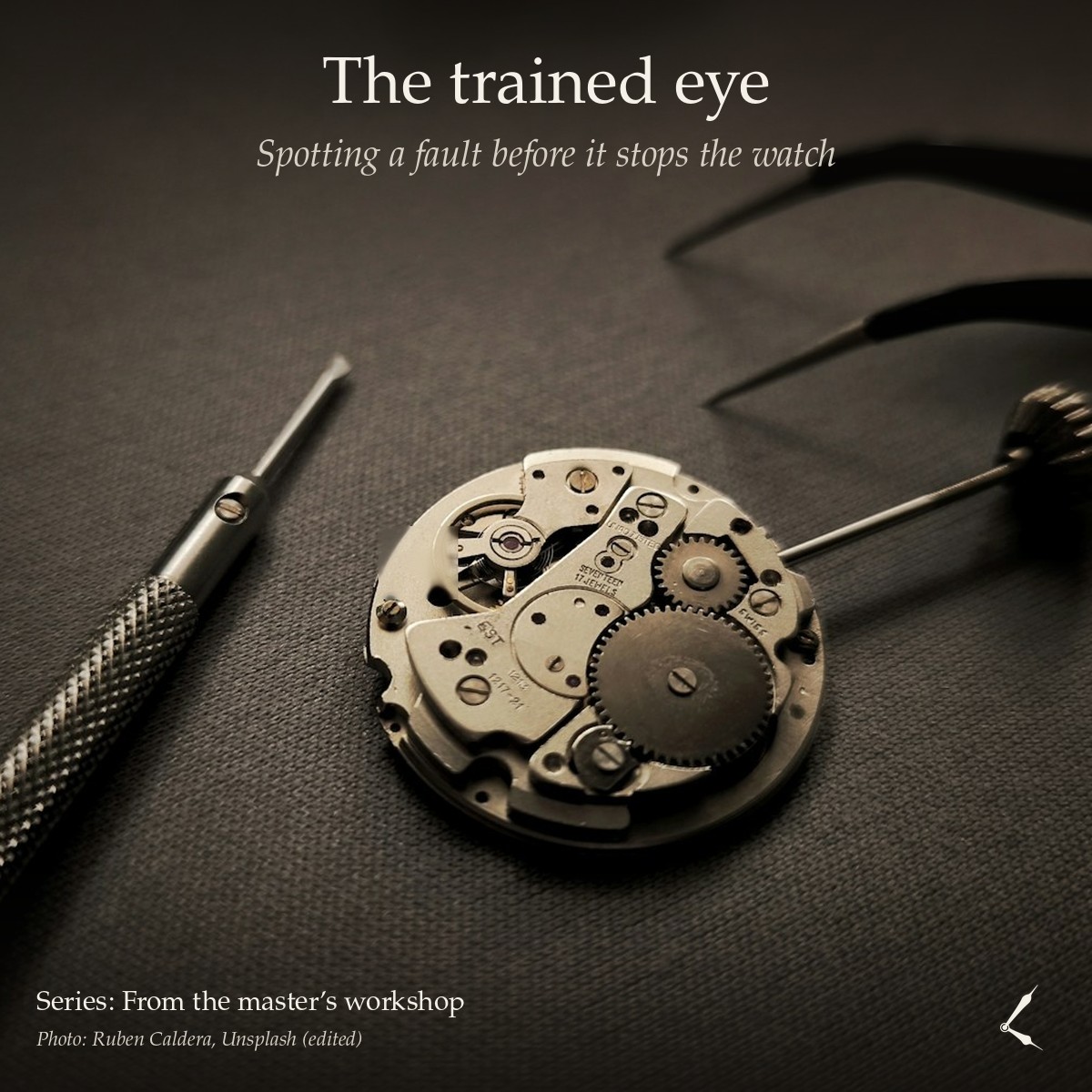
A watch stops. The layman says: “It must be overwound.” The parts swapper says: “The movement is old, we need a new one.” The true watchmaker, however, says nothing. He listens. He looks. He examines.
-
Precision files: needle files and escapement files in watchmaking
—
von
by
par
por
di
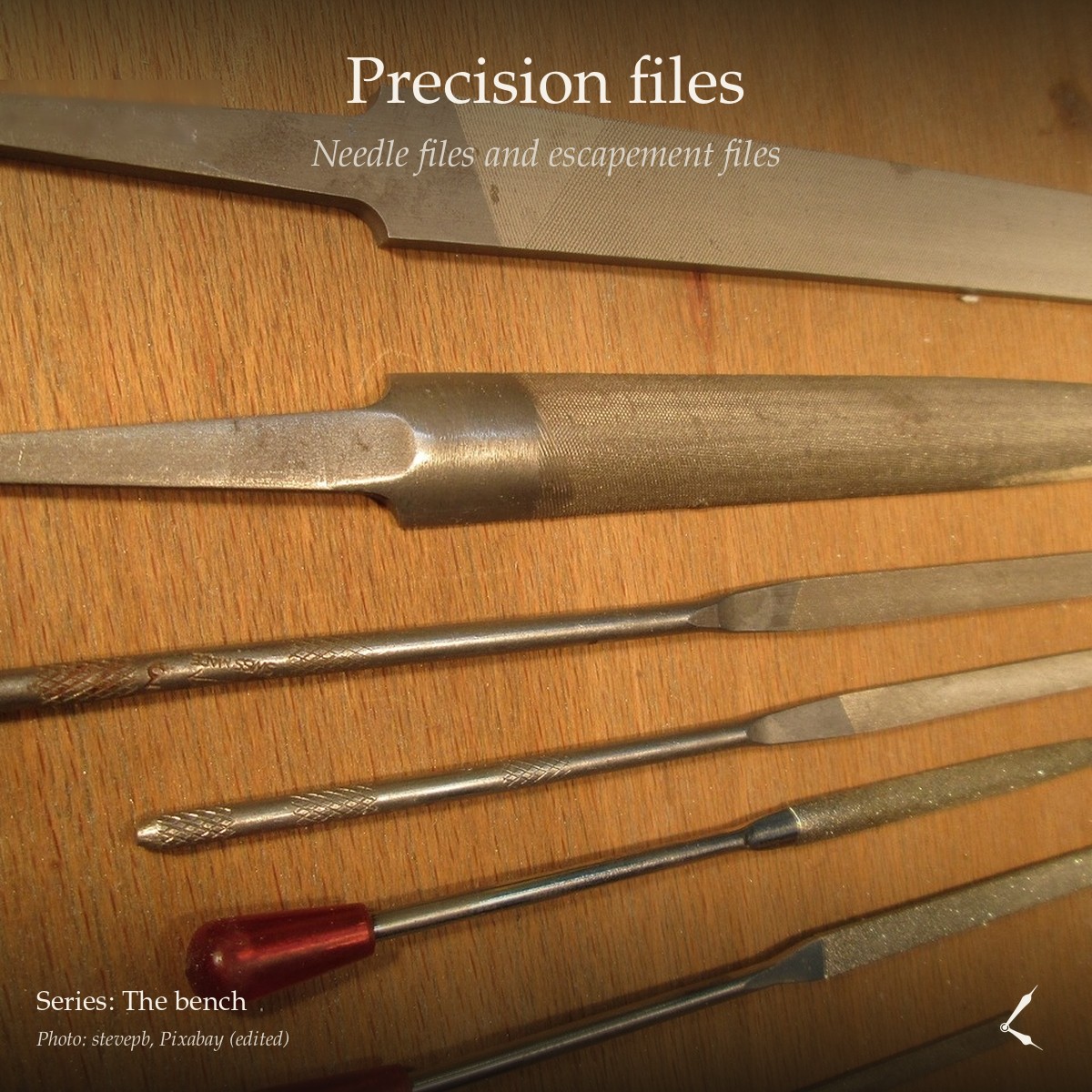
Precision files are essential tools in watchmaking for reworking delicate components with the greatest accuracy. Unlike coarse workshop files, they allow fine nuances and special applications. The choice depends on the material and the specific job. Safety and care are decisive for the long life of these tools.
-
Ratchet and click: why the click and click spring should be separate
—
von
by
par
por
di
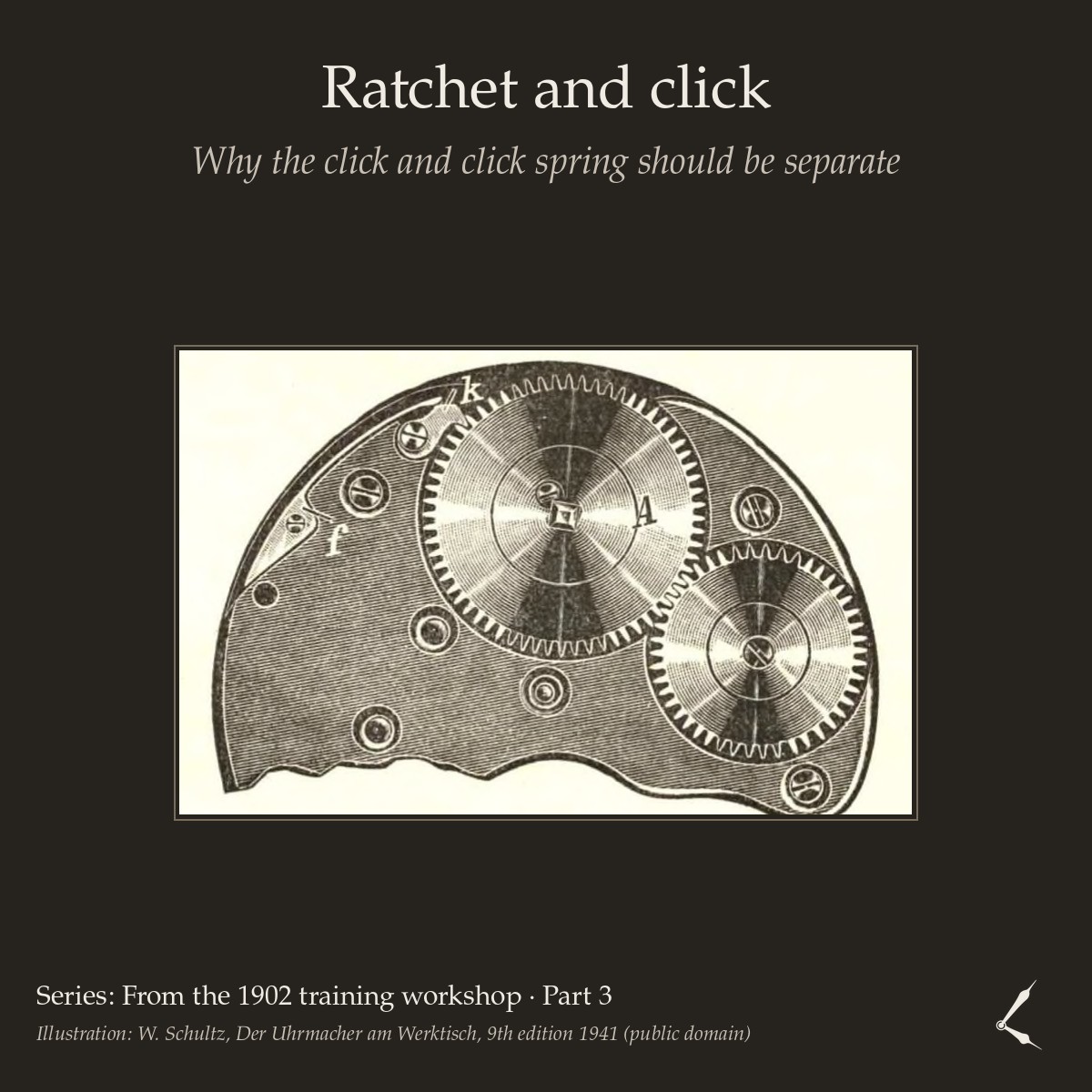
The ratchet and click is one of the simplest parts of a pocket watch, and for that very reason it is often neglected. Wilhelm Schultz used a case from the 1880s to show the damage a badly designed click can do.
-
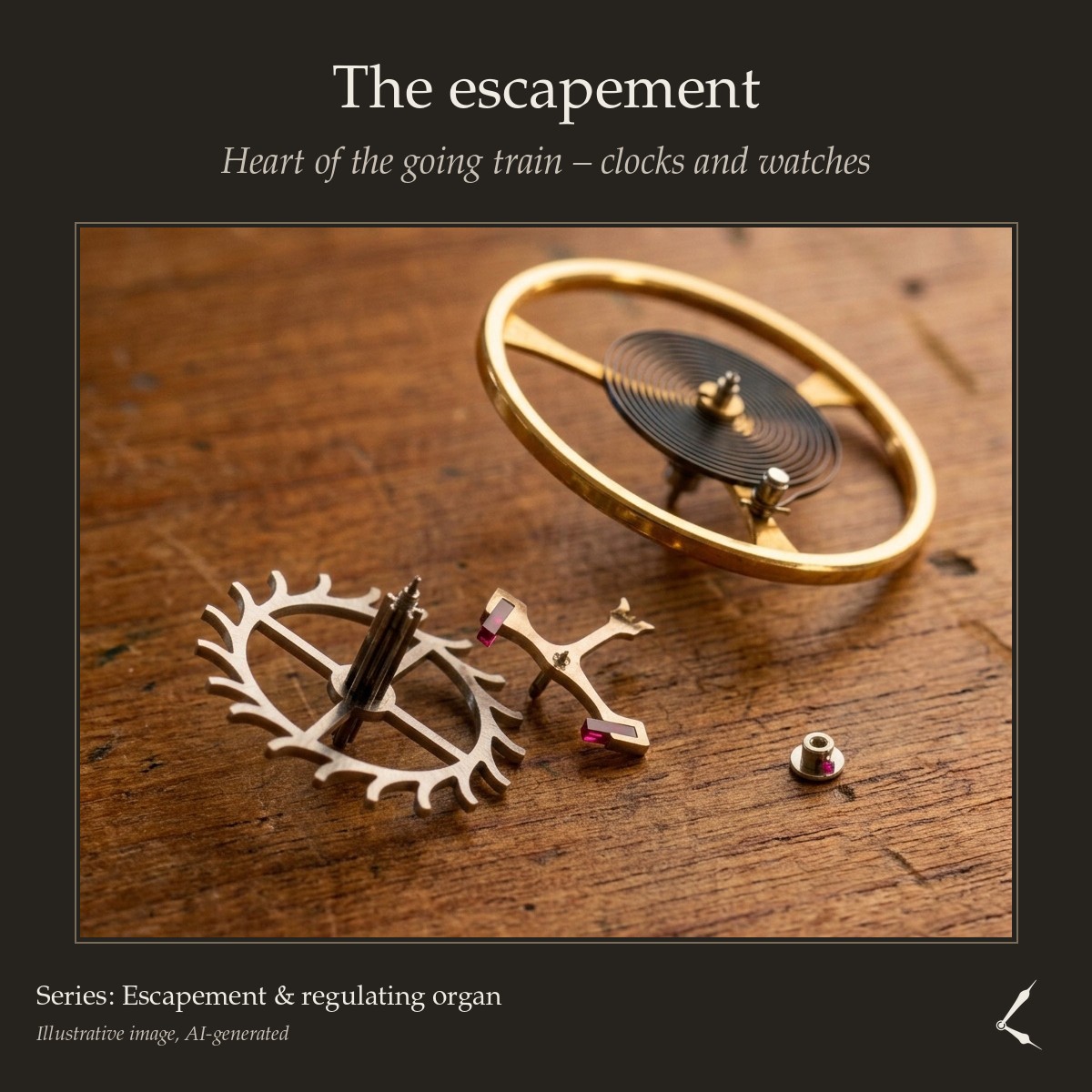
The escapement as the heart of the going train – an overview of clocks and watches
—
von
by
par
por
di
Anyone who wants to understand a movement has to understand the escapement. This article opens a new series on the escapement and regulating organ, from the classic clock escapements to the detached lever escapement.
-
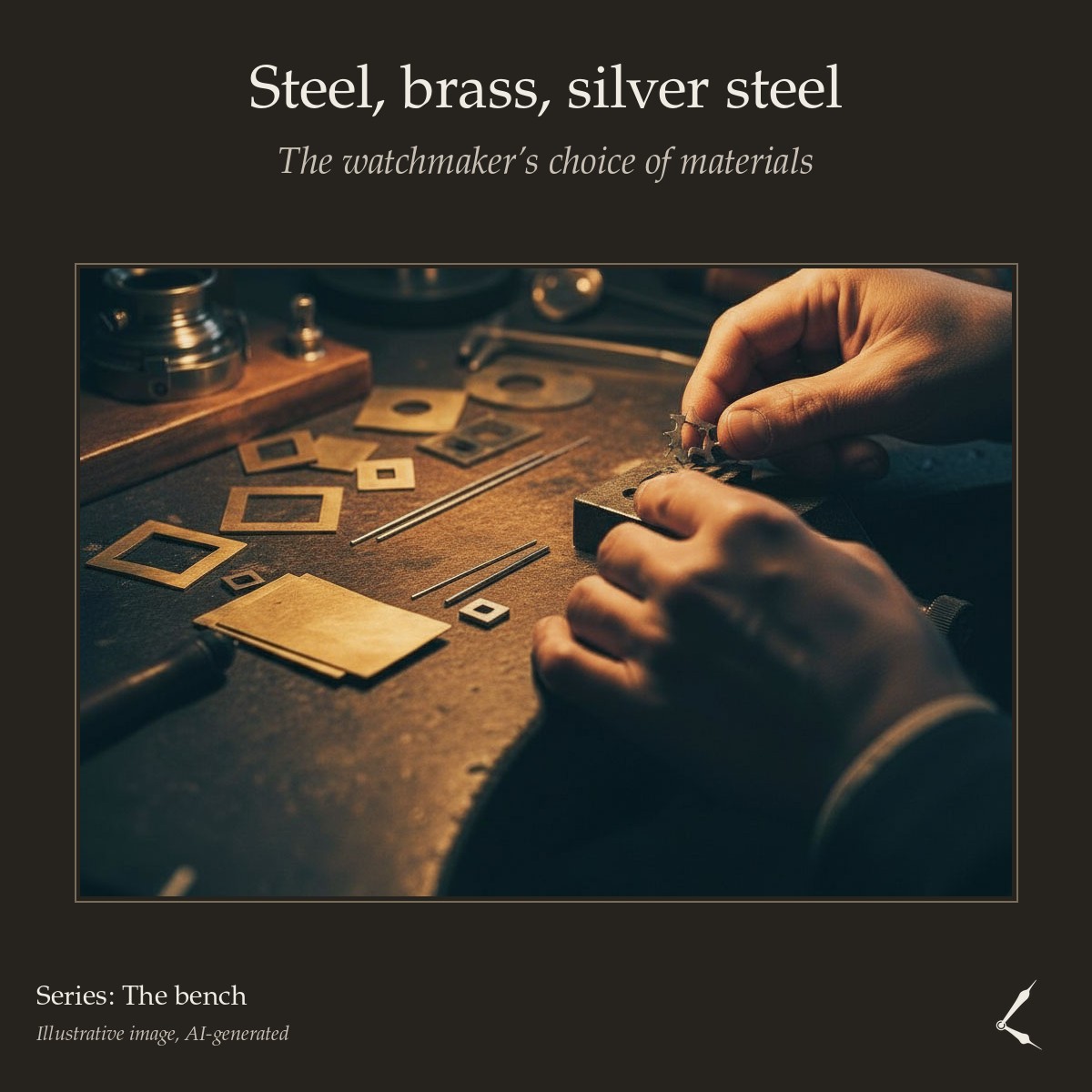
Steel, brass, silver steel: the watchmaker’s choice of materials
—
von
by
par
por
di
The quality of a mechanical watch is decided in the materials store, long before assembly. This article explains why watchmakers use a specific brass for main plates and silver steel for arbors, why brass sheet has to be stress-relieved and why different materials are paired in a bearing.
-
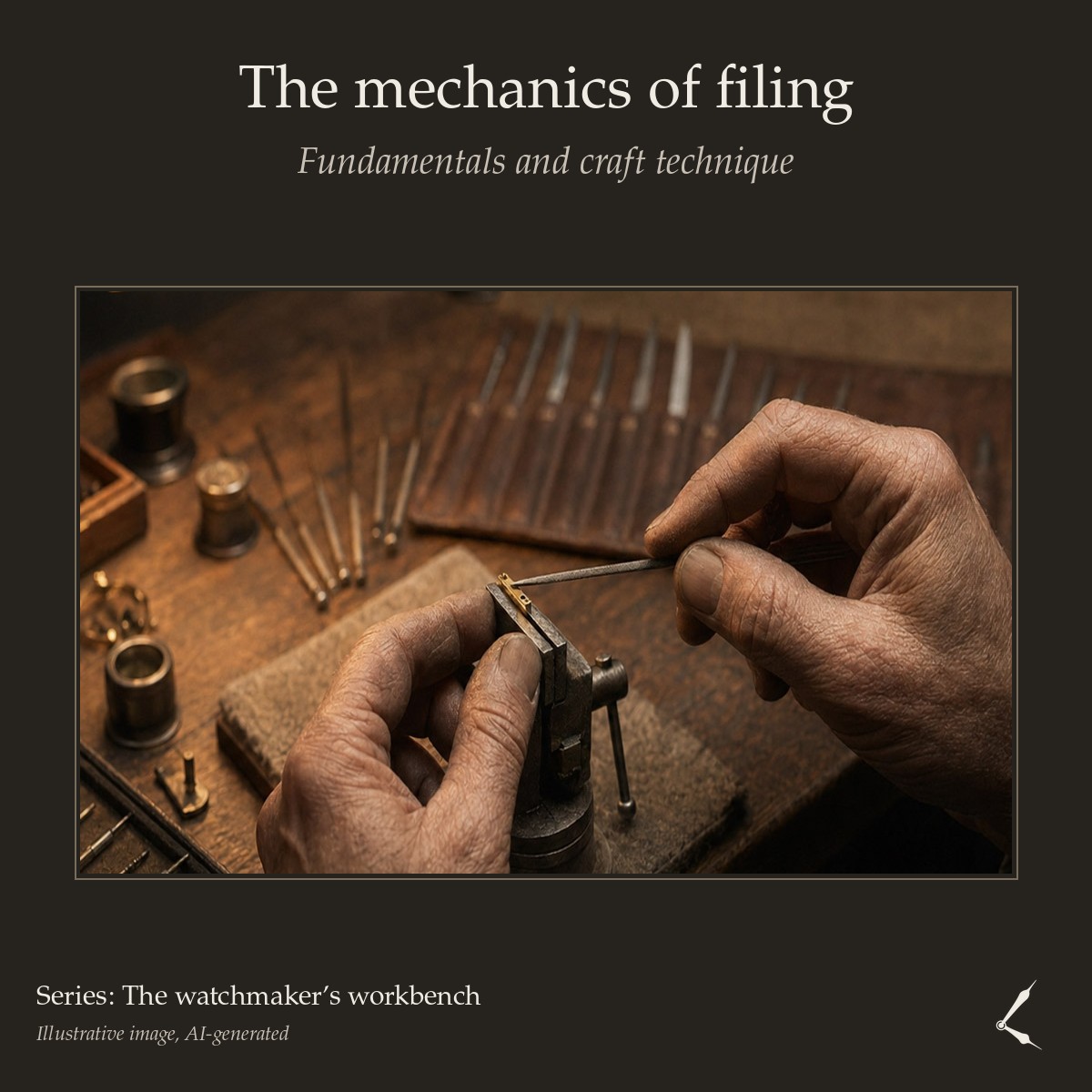
Fundamentals and craft technique: the mechanics of filing
—
von
by
par
por
di
As one of the most traditional methods of metalworking, filing remains an indispensable tool of the trade in contemporary watch and clock restoration. Whether for the subtle correction of part of an escapement or the precise fitting of a movement component, skilled command of this instrument is the foundation of professional results.
-
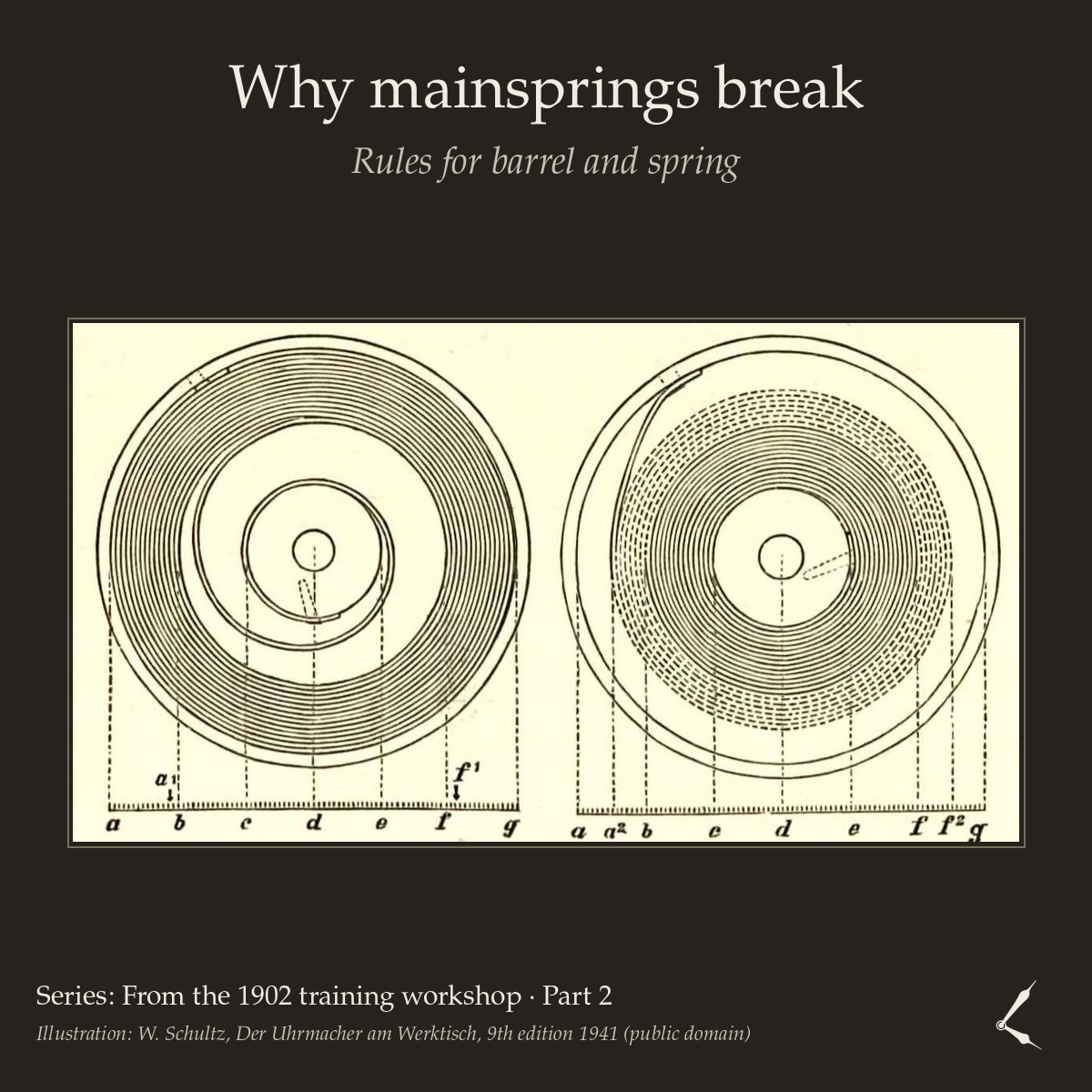
Why mainsprings break: Schultz’s rules for barrel and spring
—
von
by
par
por
di
A mainspring rarely breaks without a reason. Wilhelm Schultz named the most common faults in fitting and calculated how much spring belongs in a barrel – with a rule of thumb you can still check today.
-
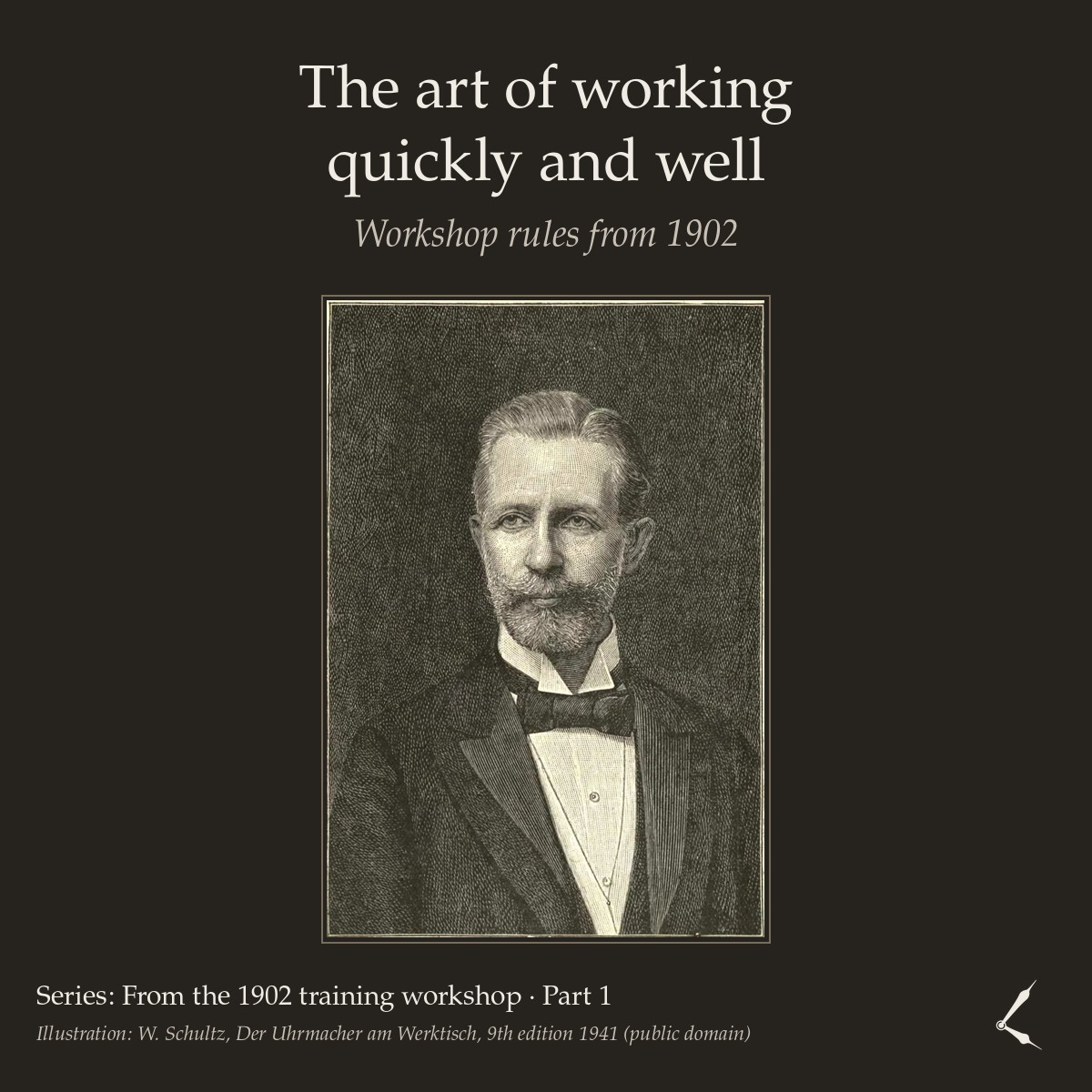
The art of working quickly and well: workshop rules from 1902
—
von
by
par
por
di
What makes a watchmaker fast? In 1902 Wilhelm Schultz gave a surprising answer: pay no attention to speed at first. His six workshop rules still hold today.
